What Is DTF Printing? Process, Materials and Limits
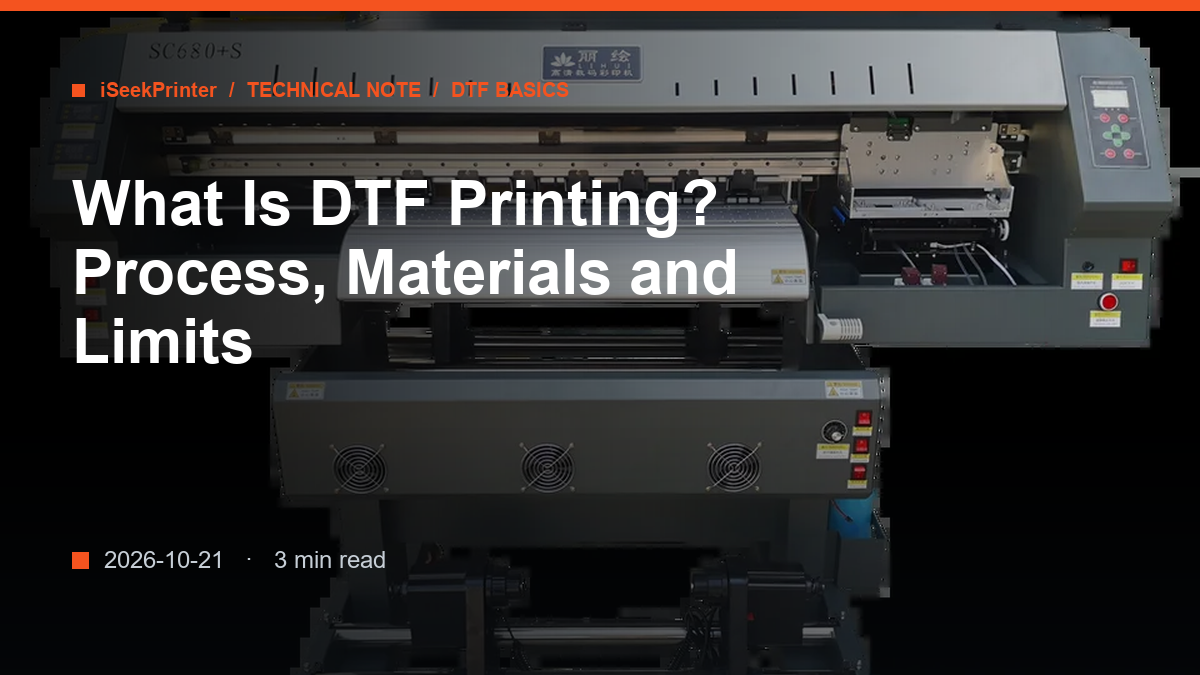
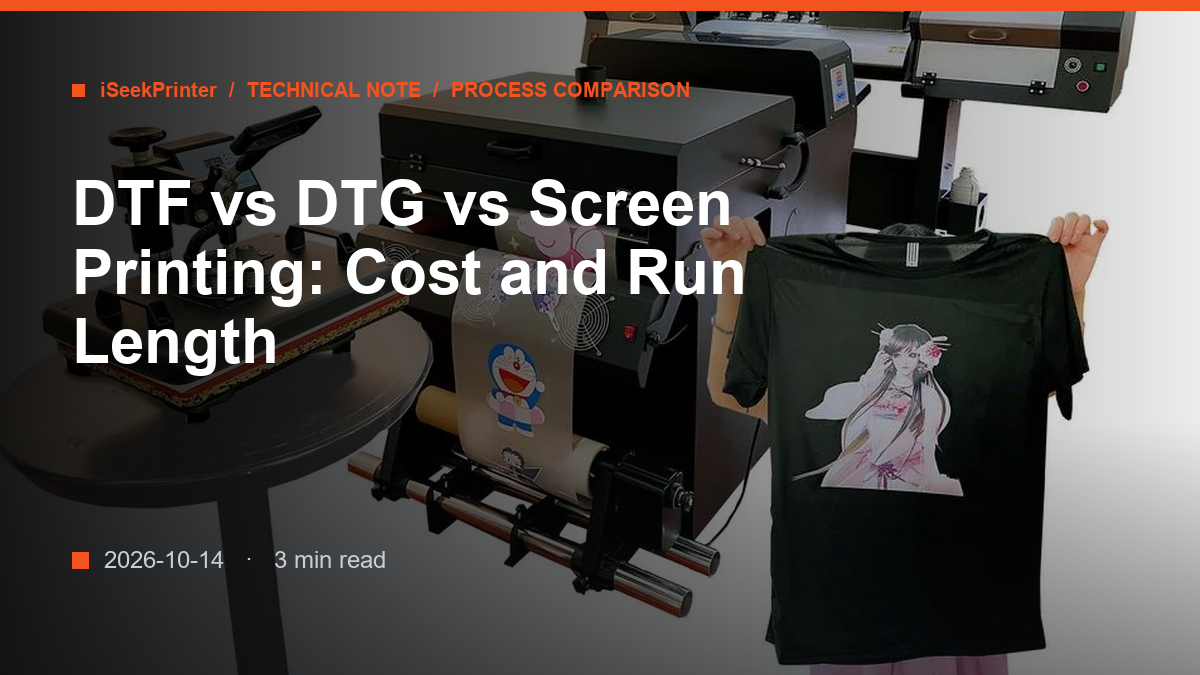
DTF printing, or direct-to-film, prints a design onto a coated PET film, applies hot-melt powder to the wet ink, cures it, and heat-presses the printed layer onto fabric. The garment never goes through the printer. That single fact explains most of what DTF can do and most of where it stops.
The DTF Process in Five Steps
- Print the design in mirror image onto DTF film, with a white ink layer under the colour.
- Apply hot-melt powder to the wet ink while it is still tacky.
- Shake off the excess and cure the powder in a tunnel shaker or oven.
- Place the cured film on the garment and press at heat and pressure matched to the fabric.
- Peel the film, hot or cold depending on the film, and let the transfer cool flat.
Steps one to three happen at the printer. Steps four and five happen at the press. A shop can run the first three in one room and press elsewhere, which is why DTF suits centralised production feeding satellite pressing stations.
What DTF Prints On, and What It Does Not
DTF prints on cotton, polyester, blends, canvas, denim and many non-woven materials, and it prints on dark colours because the white layer sits under the colour. No pre-treatment of the garment is needed, which is the practical advantage it holds over DTG for shops with a mixed order book.
It is weaker on stretch fabrics applied without care, on heavily textured surfaces where the film cannot follow the weave, and on items that cannot take press heat at all. Some coated synthetics, delicate trims and heat-sensitive accessories fall outside the process however good the print looks on film.
Where DTF Stops Working
Three situations call for a different process. Large runs of one design are usually cheaper by screen printing, where setup cost is spread over hundreds of pieces. Soft photographic prints on light cotton remain the territory of DTG. And designs that must sit inside the fabric, such as discharge or burnout work, are not DTF jobs at any setting.
DTF also has a floor. The hand of the print is a cured powder layer, so on very lightweight or drapey fabrics it can feel heavy. If the garment itself is the product, press a sample and feel it before committing a run.
What a DTF Setup Requires
A working setup is a printer, a powder shaker with a curing unit, a heat press, a RIP with DTF profiles, and consumables: film, powder, ink and spare parts. Space, power and ventilation matter as much as the machine. A curing tunnel produces heat and airborne powder that need extracting, not just a window left open.
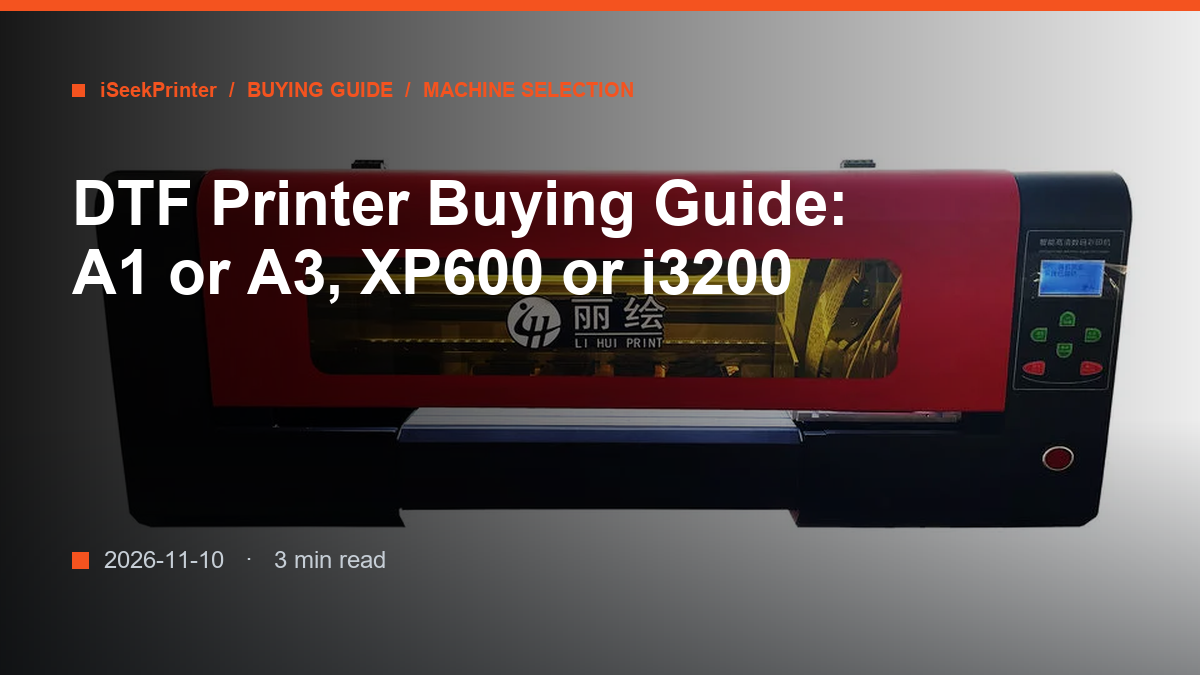
Machines are built in A1 (600 mm) and A3 (300 mm) widths, with one to four printheads on XP600 or i3200 heads, in 110V or 220V configurations. Width sets the largest design and the film waste. Head count sets throughput. Neither sets quality, which is why a single-head A3 machine produces the same transfer as a four-head line, only more slowly.
The last thing worth saying is that DTF is a production method, not a printer setting. Most failures that look like machine faults turn out to be film, powder or cure problems, which is why consumables deserve as much attention as the printer.
Comparing machines or planning a production line? Send us your output figures and we will recommend a configuration and quote it.
FAQ
Does DTF printing need pre-treated garments?
No. Unlike DTG, DTF does not need the garment pre-treated, because the ink is printed onto film rather than into the fabric. The pressing step bonds the cured ink and powder layer to the garment surface.
Can DTF print white on black shirts?
Yes. A white ink layer is printed under the colour, so DTF holds bright colour on black and navy without a separate underbase decision. White thickness is a RIP setting: too thin and the colour shifts, too thick and the print feels heavy.
Is DTF the same as sublimation?
No. Sublimation turns ink into gas that bonds with polyester fibres, so it works mainly on light polyester and leaves no hand. DTF lays a cured ink and powder layer on top of the fabric, so it also works on cotton and dark colours.